FIDE Test: The B1 Speaking Section
Difficulty:B1
-
March 11, 2026
3/11/2026
The B1 part of the FIDE oral exam lasts about 10 minutes. In this task, you have one discussion with the examiner. The format may look simple, but this part is very important because speaking represents the largest part of the oral result.

How does the B1 speaking section of the FIDE test work?
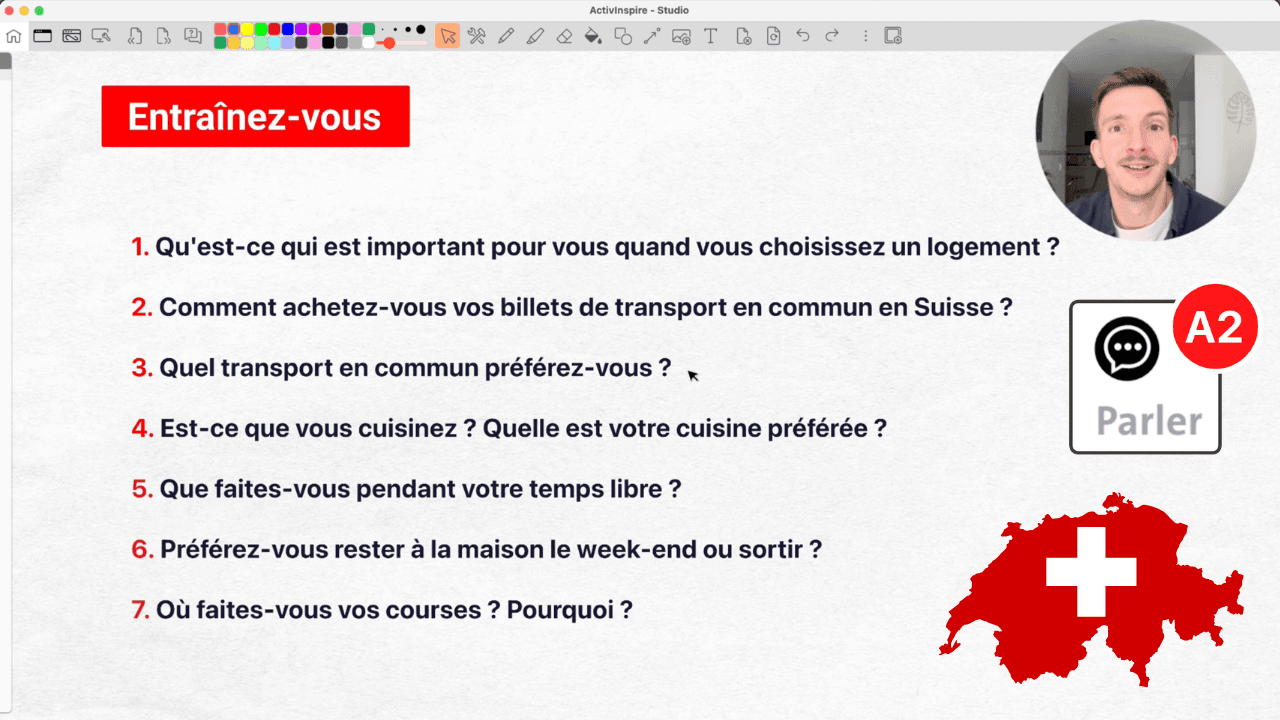
At B1 level, the examiner offers you two topics to choose from. You simply hear the topics announced, then you choose the one you want to talk about.
You need to pay attention to one important point: you do not see the questions. You only hear the topic. Then the examiner asks you several questions related to that topic.
The B1 level counts more than the A2 part, which is logical because it is a higher level. In the FIDE oral exam, the speaking part is essential. It carries much more weight than listening comprehension. This means it is not enough to understand: you must above all be able to speak in a clear, organised and sufficiently developed way.
At B1 level, you choose a topic and then answer several questions without seeing them in advance.

Remember this: at B1 level, the most important thing is not to make complicated sentences, but to speak with clarity, structure and consistency.
What the examiner expects at B1 level
B1 questions often follow quite classic patterns. If you know these patterns, you can prepare better and answer with more confidence.
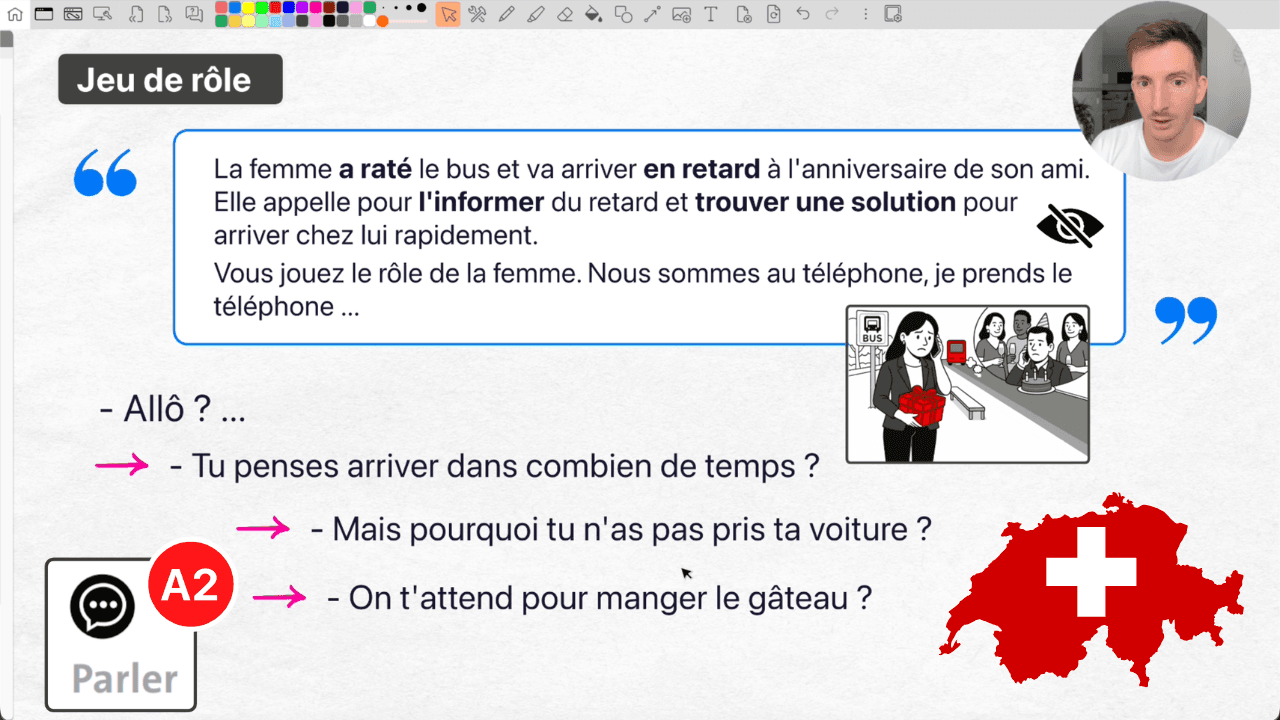
Describing a past experience
You are often asked to talk about a situation you experienced. In that case, you need to be able to speak in the past using simple but precise sentences.
Explaining a process or a procedure
This is a very common type of question. You need to explain how you do something, or how you did something, step by step.
Giving advantages and disadvantages
The examiner may also ask for your opinion about a situation, a service, a habit or a choice. Very often, you need to present the positive points and the negative points.
Taking a position in a hypothetical situation
Finally, a question may ask what you would like to change, what you would do, or what you would prefer in a given situation. In this case, the conditional is often expected.
At B1 level, four skills come back very often: talking about a past experience, explaining how to do something, comparing advantages and disadvantages, and expressing what you would like to change.
How the topic choice works
On exam day, you need to choose quickly between two topics. Some topics are easier than others depending on your experience, your vocabulary and your speaking confidence.
The most important thing is not to choose the perfect topic, but to choose the one you can talk about most naturally. A simple topic for you is often a better choice than a more abstract or more technical one.
Because you do not know the questions in advance, it is useful to practise with several possible topics. This helps you develop reflexes and recognise the usual types of questions.
Always choose the topic you can speak about most easily, even if it seems less interesting to you.
How to build good B1 answers
At B1 level, you should not answer in just one sentence. The goal is to develop your answer a little in order to show that you can explain, justify and organise your ideas.
A good answer can often follow a very simple structure: first you give your main idea, then you add an explanation, a detail, a reason or a small personal experience.
D’abord, je réponds à la question.
Ensuite, j’explique un peu.
Enfin, je donne un exemple ou mon opinion.
A simple but developed answer is better than a short answer with vocabulary that is too difficult.
Useful expressions to answer better
To do well in this part, it is useful to have a few expressions ready. They help you organise your answer and save time during the exam.
Organising your ideas
D’abord...
Ensuite...
Enfin...
Giving your opinion
Je pense que...
Je trouve que...
Selon moi...
À mon avis...
Presenting advantages and disadvantages
Les avantages sont...
Les inconvénients sont...
Un point positif, c’est que...
Un point négatif, c’est que...
Using the conditional simply
J’aimerais...
Je voudrais...
Je changerais...
With a few simple and well-mastered structures, you can already produce a solid B1-level answer.
Mistakes to avoid on exam day
The first mistake is answering too briefly. Even if your sentence is correct, it is not enough if it is too short.
The second mistake is trying to speak about topics that are too complex. It is better to stay simple, clear and precise.
The third mistake is forgetting structure. An organised answer gives a better impression than a confused answer, even with simple vocabulary.
The fourth mistake is not preparing the classic question types. If you revise past experiences, procedures, advantages and disadvantages, as well as the conditional, you will feel much more comfortable.
On exam day, avoid searching for perfect sentences. Focus above all on speaking in a continuous, logical and understandable way.
How to prepare well for the FIDE test
To prepare well for this part, it is useful to practise out loud. Reading answers in your head is not enough. You need to train yourself to produce sentences orally, with more fluency.
Also work on model answers for different topics, then try to adapt them. The goal is not to memorise a full text, but to memorise useful structures, practical vocabulary and answering reflexes.
The more you practise typical scenarios, the more confidence you gain, and the less likely you are to be surprised on exam day.
The best preparation is to repeat useful speaking structures out loud, not to learn a whole text by heart.
Conclusion
The B1 part of the FIDE test mainly asks you to speak in a clear, structured and natural way. With good preparation on the most common question types, you can significantly improve your performance on exam day.
Contact FIDE Preparation
Latest posts
Browse all posts